Gianni Biondillo is a renowned writer and a versatile observer of human affairs, history and above all, architecture. In fact, it is in architecture that he finds the means to interpret the Continental Notebooks project and Manuel Cicchetti’s photographs.
“Let’s start by saying that if we consider its area, Europe is the smallest of the world’s continents — although its density is impressive. Europe as a whole was built around a day’s walk — cities and towns spaced at just the right distance that you could reach the next one by nightfall. If I set off from Milan on foot, I can reach Como in about ten hours, and from there, I could leave the next morning and walk to Lugano in another ten hours. That is how European civilisation spread.
It was built around the postal system, which at that time meant messages and letters carried on horseback. This continent has thousands of years of history, and that history began in this big lake we call the sea — Mare Nostrum, the Mediterranean Sea. A pool where Greece, Sicily, Spain, Algeria and Tunisia essentially face one another, where we are all neighbours, and where Italy has the peculiar quality that, for geographical reasons, all kinds of people passed through, and each of them left something behind. That is what distinguishes Europe and makes it great. The further away from it you are, the more you feel it as a geographical unity.”
We have a tendency to differentiate ourselves, separating into groups who claim different lands, histories and cultures.
“It’s always North versus South, Livorno versus Pisa or my neighbourhood against yours — at the end of the day, the only thing that matters, for a lot of people, is their own home. However, despite a resurgence of various nationalist sentiments — which are frankly quite worrying — the sense of European unity is strong in the youth. I have two daughters, both of whom have won scholarships to study abroad. One is currently in China while her sister is in Estonia. The latter, after graduating in Italy, also spent six months in Innsbruck, and now she’s doing a Master’s on an international programme across three European universities. After Glasgow and Tartu, she’ll move to Malta. All in all, that will be five years of university across five European universities. For them, that is normal. My daughter in China is the only Italian in her programme — she is studying Chinese to become a native-level speaker and is also studying Russian. When she attended her first Russian lesson, everyone looked at her and asked, ‘What are you doing here? You’re Russian.’ Apparently, Chinese people see anyone with Western features as Russian — European. The Chinese see Europe as just a patch on the globe, which, when you think about it, is exactly what we think of other countries. Koreans, Chinese, Filipinos and Japanese are all the same to us, but in reality, they are all different. The problem is that Asia is truly vast. Africa is truly vast. America is truly vast. Europe is not.”
Also, we don’t share a common language — except for English, but that’s a global lingua franca.
“There is actually a remarkable precedent: Switzerland. While it’s a small — very small — country, four national languages and at least two non-state religions coexist. I was speaking with Mario Botta once, and he told me something I found quite funny: ‘The strength of Switzerland is that we ignore each other, we don’t really know each other, and we mind our own business — and that’s how we manage to get along.’ Regardless of those differences, the country has its distinctive characteristics and style — a sense of Swissness, if we want to call it that — that one inevitably feels when arriving in Switzerland. It’s like some kind of small laboratory. But we could also look back to the great empires of the 18th and 19th centuries — Austria-Hungary, for instance. Let’s not forget that we are also a very presumptuous continent. When we went beyond our borders to export civilisation, what it really meant was colonising and plundering other continents, so it’s not surprising that a clash of civilisations exists.
As Rudyard Kipling put it in The White Man’s Burden, as custodians of a millennial culture, we feel driven to bring that culture to the world and civilise the uncivilised. So, there are lights and shadows.”
Gianni, you were born in 1966. I’d like to ask you, how many Europes have you known?
“Well, that’s a great question. You know, we grew up inside a Europe divided into two, with the Iron Curtain and the Berlin Wall. Even within my own country, as the son of a southern couple who carried the baggage of a pre-industrial culture, I’ve experienced two Italies. My parents — my mum from Sicily and my dad from Campania — were immigrants in the North, and didn’t even speak their respective dialects at home because they wouldn’t have understood each other. So I was born in Milan, with a southern surname, a southern face and a Milanese accent. Every summer, we visited their home village, and I felt this great contradiction — there were two Italies, never mind two Europes. I never saw Berlin before the Wall, although I occasionally come across old photographs or footage. But when I did visit Berlin, at its peak of euphoria after the Wall was torn down, I could distinguish the neighbourhoods by their architecture — some had a clear Soviet influence, and others had a Western one. And yet, it felt like one great, unified community. It didn’t take that long, did it? Some things changed very quickly, while others are residues of a culture so old that we might never manage to smooth them out — think of Hungary or Poland. So, considering all this, since so many people speak so badly of it, I’d like to say a few words in its defence: the European Union is an incredible project, one that tries to bring together histories, cultures, languages and religions that on the surface seem vastly different from one another, saying ‘Look, we are different — but we are not that different.’”
You’re saying there is a common cultural, artistic and architectural matrix.
“When perspective was invented during the Renaissance, artists came from all over Europe to study the drawing techniques of the Italians. Or I could mention how the Dutch imported coffee and spices from around the world, which are the same spices we still use today. We are, in fact, unable to stay within our national borders — it’s just how things are. But let me double down on this — my generation didn’t commonly speak a second language, while our children often learn more than one.”
If we look at international geopolitics, it seems like we’re experiencing some sort of European Pride right now — partly thanks to Trump’s isolationist policies.
“After what happened in the United States, we have seen people gather in our public squares, and our values reemerge — something that the mainstream press had somehow forgotten. Europe is often discussed in terms of economics and finance, with the conversation usually revolving around fiscal stability rules, failing to understand that Europe was built on a combination of many elements that went beyond economics alone. I mentioned perspective earlier. Take architecture: if you look at the facade of a university in Budapest or Tartu, it could easily be mistaken for a building in Geneva, Milan or Barcelona, because after all, it is a neoclassical building with a pediment, columns and capitals. That is our culture, stretching all the way back to the Roman Empire, and before that to ancient Greece. It evolved, and it’s been reinterpreted, reworked, updated — whatever you want to call it — but it’s the same at the core. Some features have identified us for two thousand years, for better or worse.
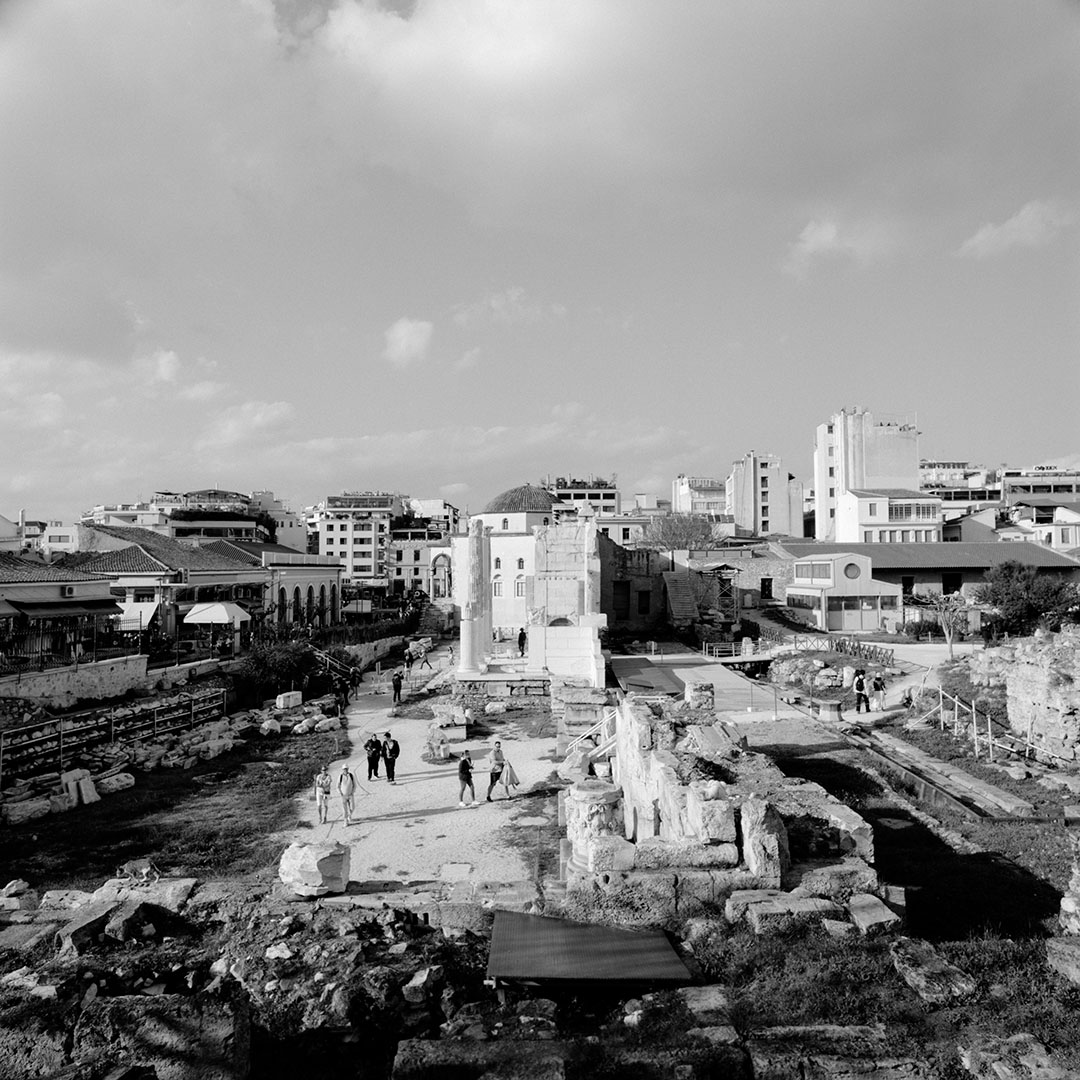
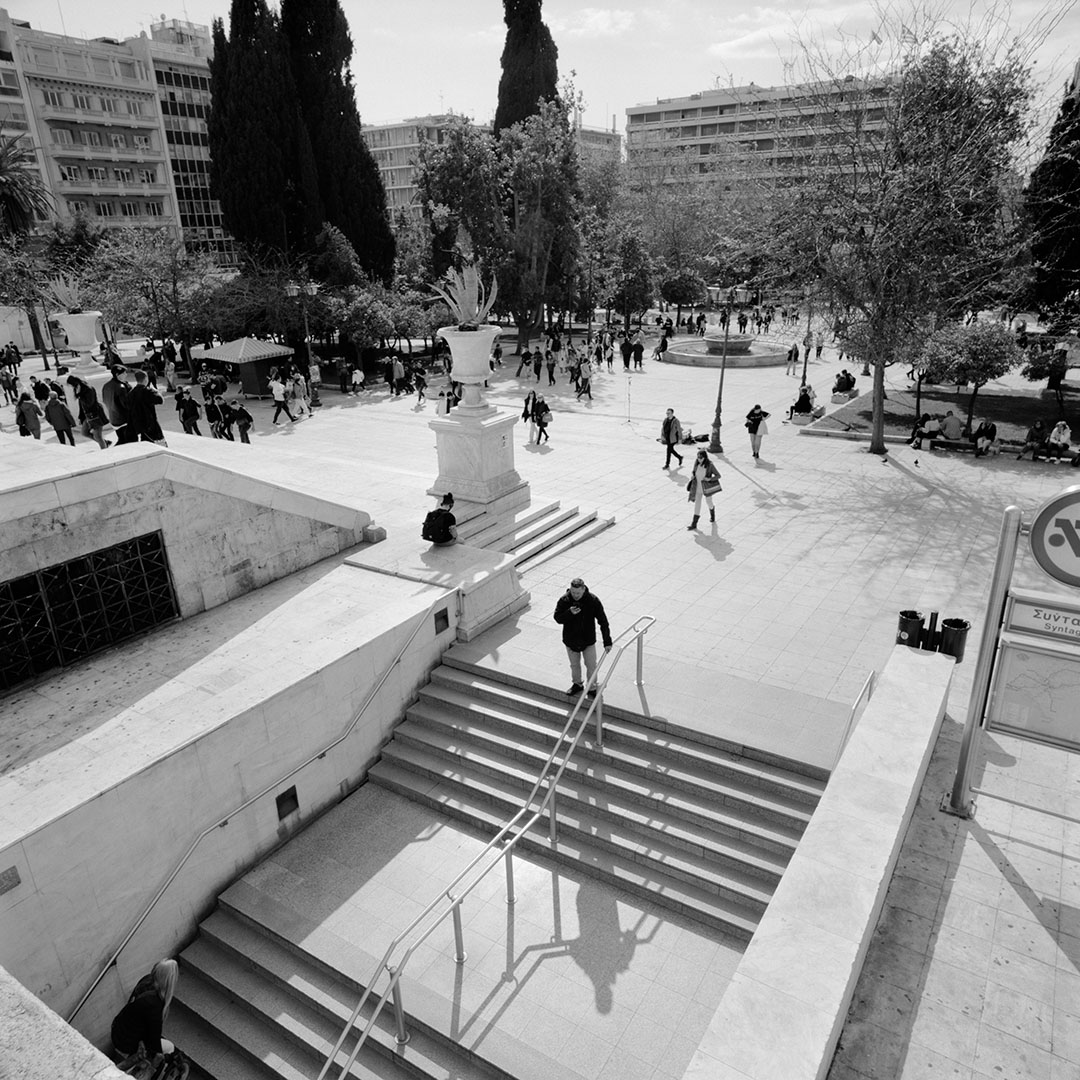
But I always go back to what I consider the most ingenious urban invention ever: the square. Squares, as we know them, don’t exist anywhere else in the world — at least not as a native concept. Where they do appear, they were imported. We invented the square here, in the Mediterranean, as a transformation of the Greek agora, which became the Roman forum, and then turned into the medieval square. Nowhere else in the world will you find a place where, during the day, someone is getting a haircut next to someone smoking a cigarette, two people are kissing, someone else is reading the newspaper, others are discussing politics, and a kid is kicking a ball around. It’s the concept of a space that is collective and public — it belongs to everyone, and it must be cared for as such. It represents the city’s identity, reminding us, as I said before, that cities are spaced roughly a day’s walk apart.
Pedestrian streets, tree-lined avenues, squares, benches and meeting places — all these elements can be found all over Europe, throughout cold and warm climates, with every variation imaginable. Sizes have changed over the centuries, but the concept is still rooted in us. In fact, I want to share another anecdote.
Think about big American shopping malls — the first one was built on the West Coast, in California. And what are malls if not enclosed pseudo-cities? Inside, there are paths, fake old squares and shops, eateries serving sausages and sauerkraut next to Chinese restaurants. Malls were invented by an Austrian architect, who confessed: ‘Ever since I moved to the United States, I missed having a place where I could walk, look at shops, buy things and meet people — it’s just highways over there.’ When American students come to Europe and see a European square, if you suggest, ‘Let’s go for a walk,’ they look surprised. They reply, ‘For a walk? Where?’ My daughters showed me a few funny videos where those same students, once they went back to the United States, said, ‘I want to do something people do all the time in Europe: I’m going out for a walk.’
European squares are collective, public spaces. Nobody is going to ask for your ID and decide who can or cannot come in. Whether you are a nobleman or a Roma person, you can experience the square as a citizen, as an inhabitant of this city. Citizen, from civitas, civilisation.
A shopping mall is a similar commercial and collective space — but a private one. There is security at the door — even if we don’t see them — there are cameras everywhere, and someone decides who can and cannot enter. If a Roma family arrives, they are not allowed into the mall — they are thrown out. The entire shopping centre is conceived to push you towards fulfilling one single function: consumption. You must buy things and keep the money flowing. One could build the most beautiful shopping centre in the world, but it would still belong to someone. Whereas a collective public square belongs to everyone, and therefore, it is also mine.”
That said, some would argue that shopping malls are not the most contemporary equivalent of a square. Nowadays, public squares are virtual ones. Yet, the same question applies. Who do they belong to?
“Whenever I open a social media page, I read all those things we never notice, which tell us, ‘Everything you post in this virtual space, which is public in theory but actually private, is mine.’ So it belongs to them, stored on a server somewhere in the United States — in Nebraska, California, or wherever the hell it is. In other words, we hand over our identities to someone living in California who, tomorrow morning, might decide to shut down our profiles, and we’d lose our pages along with all they contain. They can do that because we signed away our rights by agreeing to their terms and conditions. So those are not virtual squares, just like shopping malls are not squares. Social media squares are spaces someone owns. Here’s another example. Take major capitals — not just European ones. At some point, private businesses built shops with architecture that began to alter the very nature of old town areas. When you think about it, it’s basically capitalism attacking the city’s public spaces in an attempt to privatise them. A good example of this in Milan is Piazza Gae Aulenti. It is not ours. If they wanted to close it, they could. They allow us to walk through it, as if we are somehow under the protection of our new lords. That’s what used to happen under feudal lords. In Florence, during the Renaissance, lords used to have stone benches placed in front of their noble palaces. It was a sort of gracious concession from the nobleman to travellers, passers-by and weary citizens who would rest in the shade provided by the Strozzi or Medici families. Now, we are witnessing a similar dynamic but on a much larger scale. They are telling us, ‘I allow you to get an ice cream and eat it in Piazza Gae Aulenti, but remember that it is not yours.’ That is, in a way, a form of neo-feudalism, and it is very worrying. Local councils claim to have no money, so they are forced to turn to private interests, and private interests reply, ‘Fine. We want to get our hands on the city and make it increasingly ours.’”
Gianni, how aware are people of this European identity? The European Commission invests heavily in culture.
“There is an enormous amount of bureaucracy involved with the European Commission, and this often generates opposition. Bureaucratically, we feel very distant from Europe. That is because we perceive it as a place called Brussels where people earn a lot of money to come up with increasingly absurd laws. Of course, that is a common but not faithful perception of it. So on the one hand, I defend the great European project as a utopian, brilliant and extraordinary endeavour, but on the other hand, I must admit that the way we communicate about this project is all wrong. Populist parties love to exploit that. They spread hatred, and in this very delicate moment in our history, everything could collapse. Let’s not forget how violent Europe has been throughout the centuries. We have killed millions of people in the name of fraudulent ideals, disguising our true intentions, and now, the most visceral and frightening sentiments of hatred could be unleashed again